
Before you file “BSCI certified”: what a factory audit document actually tells you
We went through every audit reference in our 209-factory directory. Most of them were the factory’s own words. Here is how to read the few documents that actually tell you something.
The PDF that says “certified”
Almost every sourcing conversation reaches this point. A supplier attaches a PDF and writes: “We are BSCI certified.” It sounds like a yes.
It isn’t quite. BSCI is run by amfori, a business association, as a verification system rather than a certification. An auditor visits one site, grades it from A to E and writes down what was found. Sedex says the same about SMETA: no certificate, no pass or fail. The report describes the site. You decide what it means for your order.
What our own directory shows
The 40-versus-25 gap is the mix-up we see most. Sedex membership is a place on a data-sharing platform. A SMETA audit is a visit by an approved audit company. A factory can be a member for years without being audited.
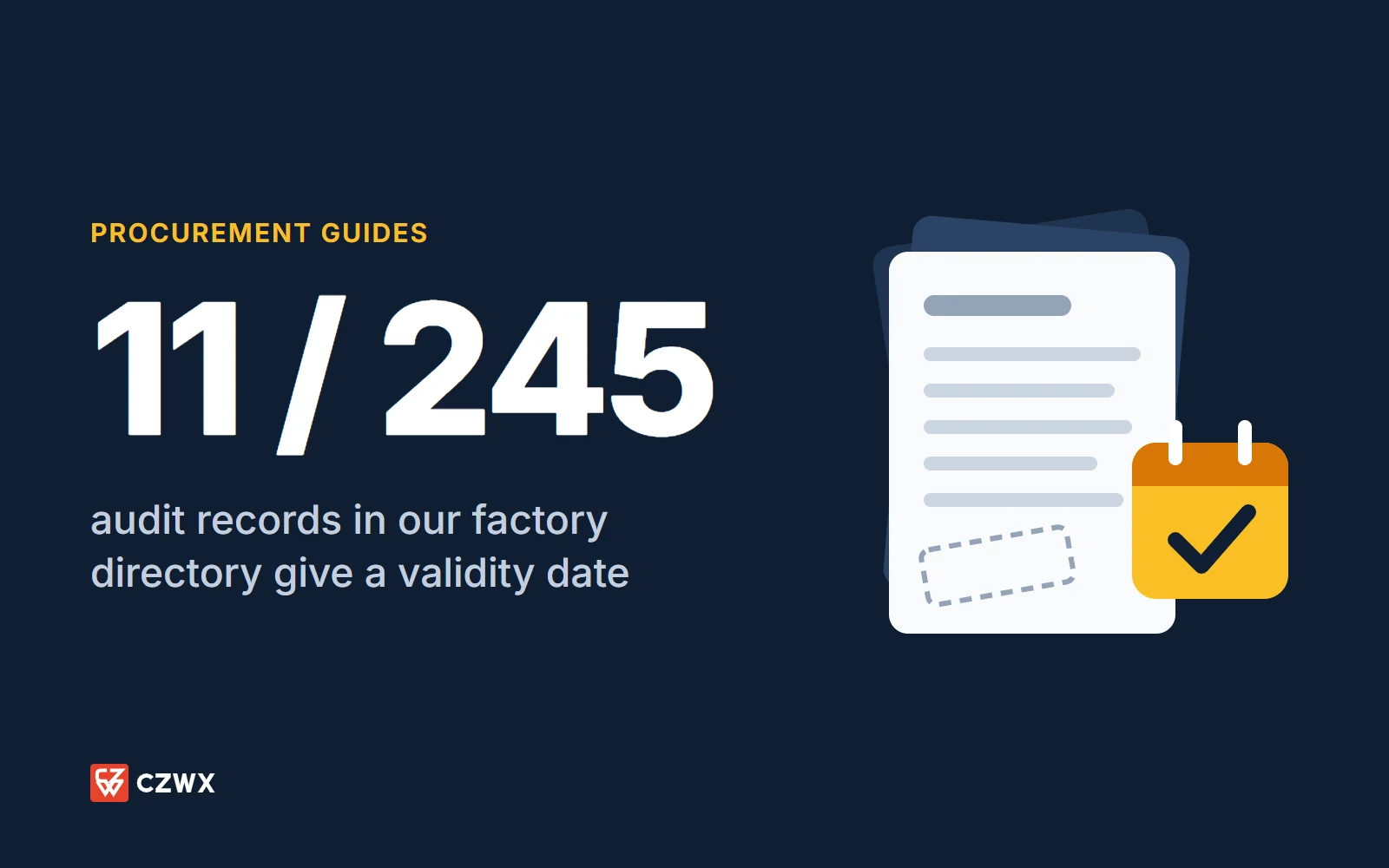
The 11 out of 245 matters just as much. Most public information never tells you whether a report is still current, so “has a BSCI report” and “has a valid BSCI report today” are different answers.
BSCI in sixty seconds
Every amfori BSCI audit ends with a grade from A to E. An A or B keeps the record valid in the amfori system for two years. A D or E means a follow-up audit within twelve months. Audits can be announced, semi-announced or unannounced, and only amfori members can request one – the member holding responsibility for that producer asks for it.
So the two words worth asking for are the grade and the date. “Certified” tells you neither.
SMETA in sixty seconds
A 2-pillar SMETA covers labour standards and health and safety, with a basic look at environmental management. A 4-pillar audit adds a fuller environmental assessment and business ethics. There is no score at the end: the report lists non-compliances and the agreed corrective actions, and each customer judges them against its own rules.
Watch what an auditor actually does

amfori’s own webinar walks through the types of audit, the audit cycle and how auditors are qualified. If you only have ten minutes, start at 38:13, where it covers the findings that come up most often and how they get corrected.
Three questions before it goes into your supplier file
- Which building was audited?The address on the report should be the place your order will be made, not the trading company’s office.
- When, and is it still current?Ask for the audit date and, for BSCI, the grade. No date, no conclusion.
- What was found, and what was closed?Ask for the findings and the corrective-action status, not just the cover page.
Buying licensed character products? Add a fourth: a social audit is not the licensor’s factory approval. Disney, for example, runs its own programme, which we explain in our Disney ILS article.
How we label it at CZWX
In our directory, a report without a stated date is shown as “public report · validity to confirm”. A factory’s own claim stays a claim. Neither becomes a badge.
Sources
- amfori: What happens during an amfori BSCI audit? (YouTube, 2025)
- amfori: requesting a BSCI audit as a producer
- TÜV NORD: amfori BSCI service description
- Sedex: SMETA 7.0 one-pager
- Sedex: SMETA audit
- CZWX factory directory, 209 profiles, counted 2026-10-17