
“Looks good” is not an approval: turn a diaper-bag sample into a production record
The sample on your desk becomes the standard the factory produces against. Here is how to write comments a factory can act on – and an approval that still means something three months later.
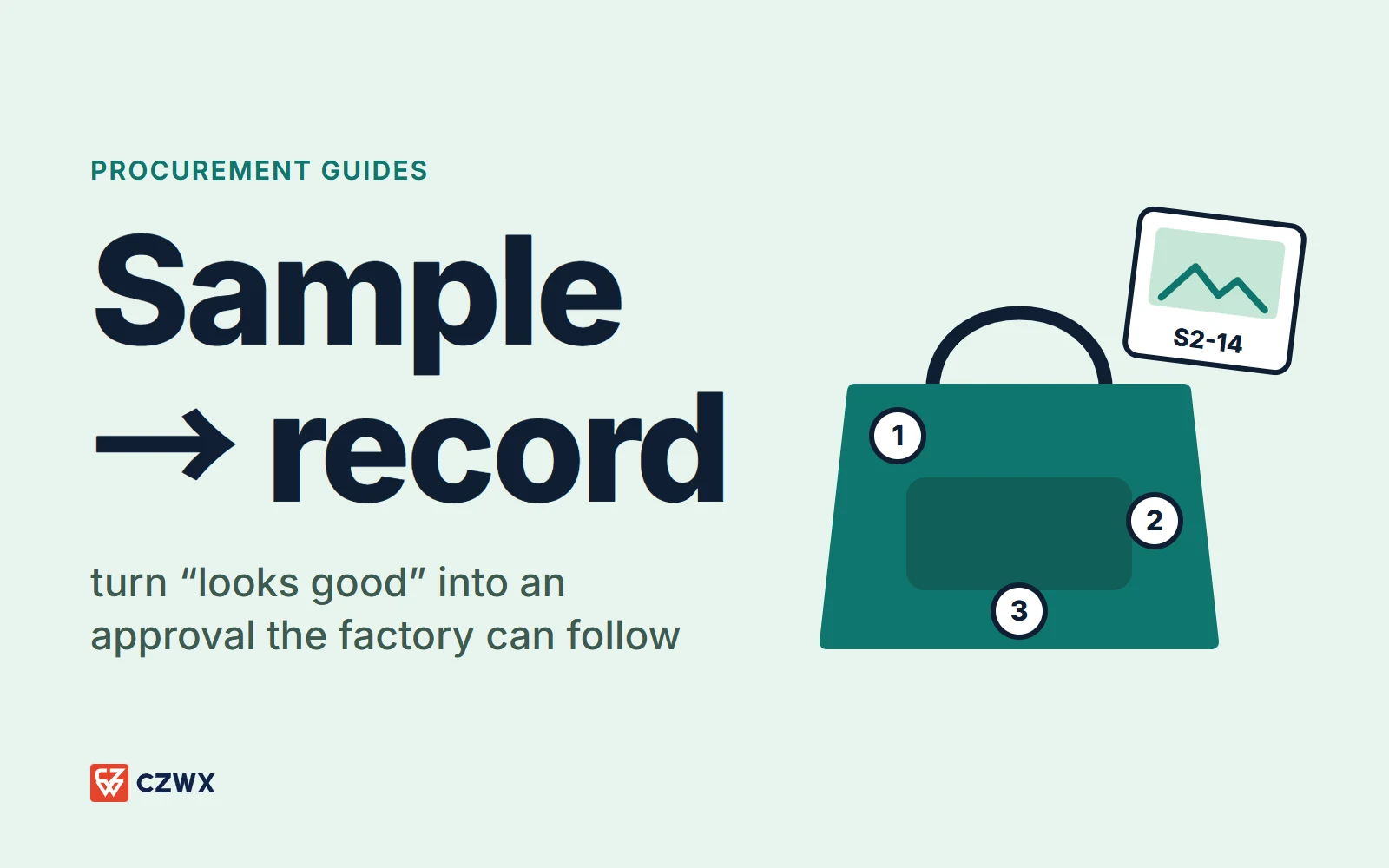
The approval nobody could find
The sample arrives, everyone likes it, and the comments go into a chat: “stitching bad”, “colour a bit off”, “OK”. Three months later the production bags differ from what you remember, and nobody can prove which sample was approved or what was changed.
The fix is not more meetings. It is a record that names the sample, places every comment on the bag and ends each comment with a decision.
Name the sample before you judge it
Write down the sample code, brief revision, supplier, proposed production site, date received and every accessory in the box – a changing mat, bottle pouch or stroller strap is part of a diaper-bag family. Photograph the same physical sample from the front, back, both sides, inside and base, with a scale where size matters.
Say which stage it is. A concept sample can settle shape and pocket layout with substitute materials. A pre-production sample is judged against the real materials, artwork and packaging. Approving one stage does not approve the next.
Inspect in the same order every time
- OutsideSymmetry, panel matching, seam paths, binding
- ClosuresZipper travel, pullers, snaps and buckles
- CarryingHandles, shoulder straps, anchors and reinforcement
- InsidePockets, lining, labels and loose components
Working from outside to inside means the next person can repeat your check and find the same things.
Write comments a factory can find
Hard to act on
“Stitching bad on the strap.”
Can be found and checked
“Left shoulder anchor: two skipped stitches beside the box reinforcement – photo S2-14.”
Put a location and a photo number on every observation. Only record measurements where you have a method. A desk review cannot produce load, leakage or chemical claims; if the market needs testing, record the sample identity and the test request so the result ties back to this construction.
Handling checks are not product claims
Open and close every zipper, adjust each strap through its range, put the changing mat in its pocket and see whether the bag stands as designed. Write what happened under which simple condition: “zipper completed ten manual cycles on sample S2 without snagging” is an observation. “Durable zipper” is a slogan. The same goes for insulated pockets, wipe-clean surfaces and stroller clips.
Every comment ends with a decision
- Accept as shownNo change needed.
- Correct and documentThe factory names the cause, the fix and where it will be checked.
- ResampleThe change is big enough to need a new sample.
- Hold for evidenceWaiting for a test, document or artwork approval.
Keep cosmetic preferences apart from fit, function and compliance, so a small shade difference does not get the same attention as a missing identity label. Approval can be partial: accepted for shape while artwork stays open.
Freeze the reference – and the online identity
When the open points are closed, issue one acceptance record naming the physical sample, the approved deviations, the bill-of-materials revision, the artwork file and the packaging file. Any later change needs a new written decision, not a feeling that it is close enough.
If the bag will be sold online in the EU, the page has to stay aligned with that file: manufacturer contact details, an EU responsible person when the maker is outside the Union, product identification with a picture, and warnings in a language buyers understand (our GPSR guide).